
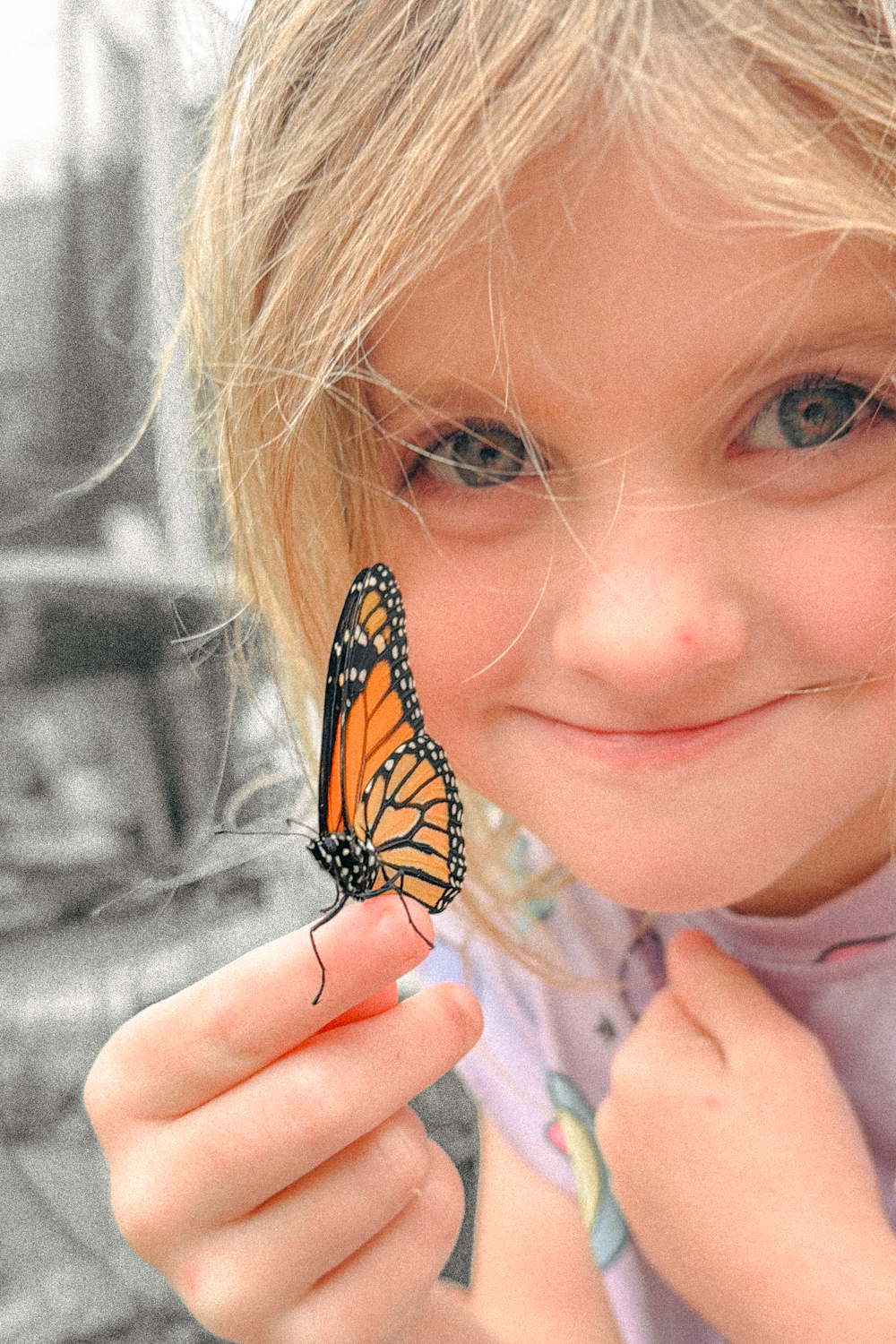
Today I'm sharing how to raise monarch caterpillars, from milkweed eggs to tiny baby caterpillars to blooming butterflies.
From milkweed to butterfly - learn how to raise monarch caterpillars in your own backyard. This is an easy, hands-on guide for parents, kids, and nature lovers. Watch my YouTube Video of my complete process!
Backyard Butterflies
If you plant milkweed, they will come. I didn’t believe that at first. It sounded like one of those sweet nature facts that feels a little too magical to be true.
But it is true.
For the past two years, I’ve been raising monarch caterpillars in my backyard, and not in a complicated, scientific way. I don’t order them. And I don’t buy kits. And really, I don’t do anything fancy. I just buy milkweed. Keep it in pots in my garden, or plant it in my flower bed. And then the butterflies find it.
This is such a fun way to get outside and embrace a garden. Kids will love taking care of the caterpillars too!
The One Thing You Need to Know
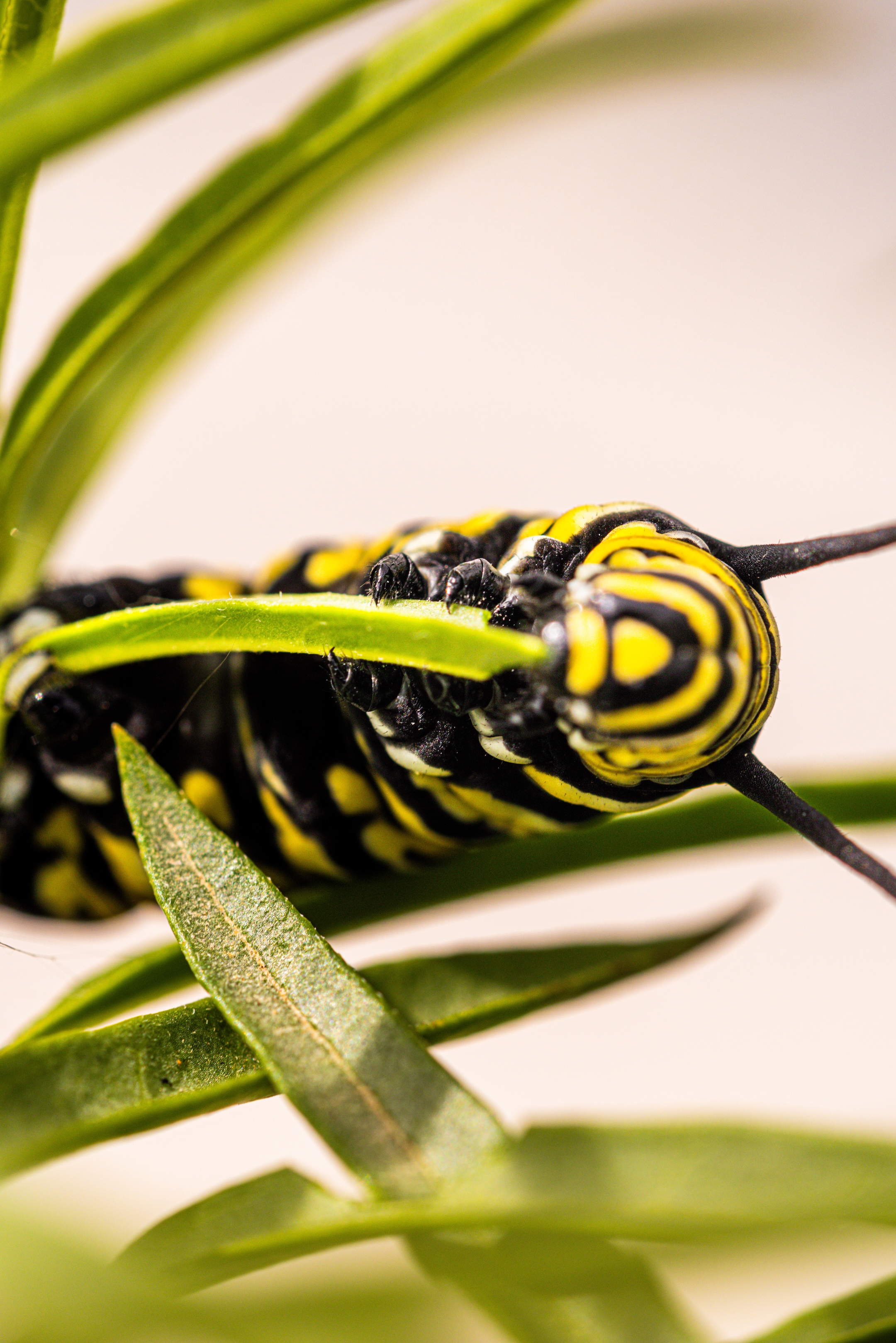
Monarch caterpillars only eat milkweed. Monarch butterflies only lay their eggs on milkweed. That’s it. That’s the whole system.
No milkweed → no eggs
No eggs → no caterpillars
No caterpillars → no butterflies
So if you want to support monarch populations in the simplest possible way:
👉 Plant milkweed.
Even one plant makes a difference.
Let's do this...
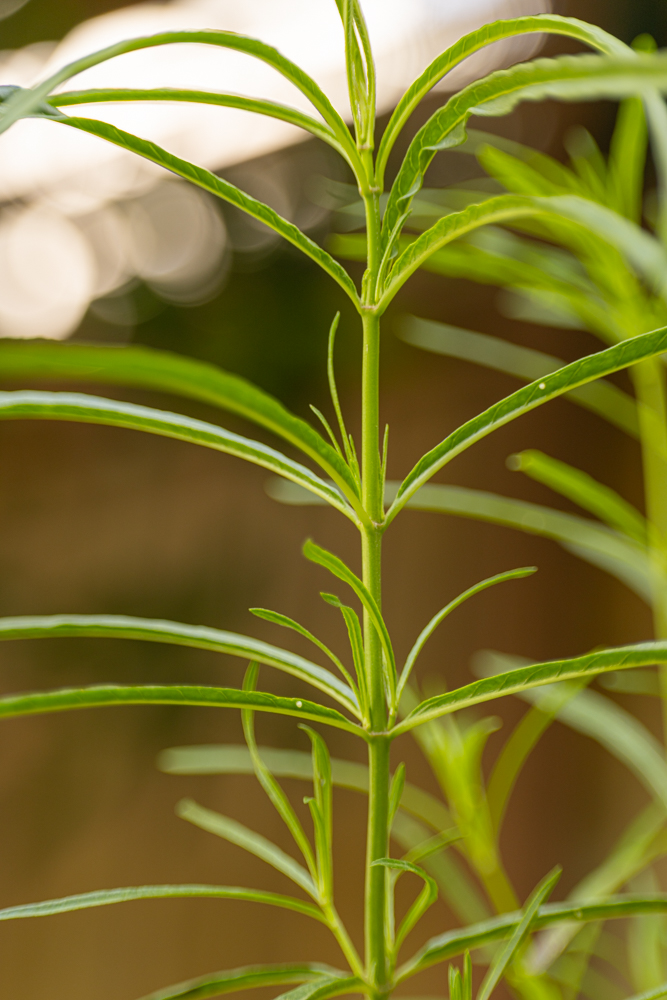
🌱 Step 1: Start With Milkweed
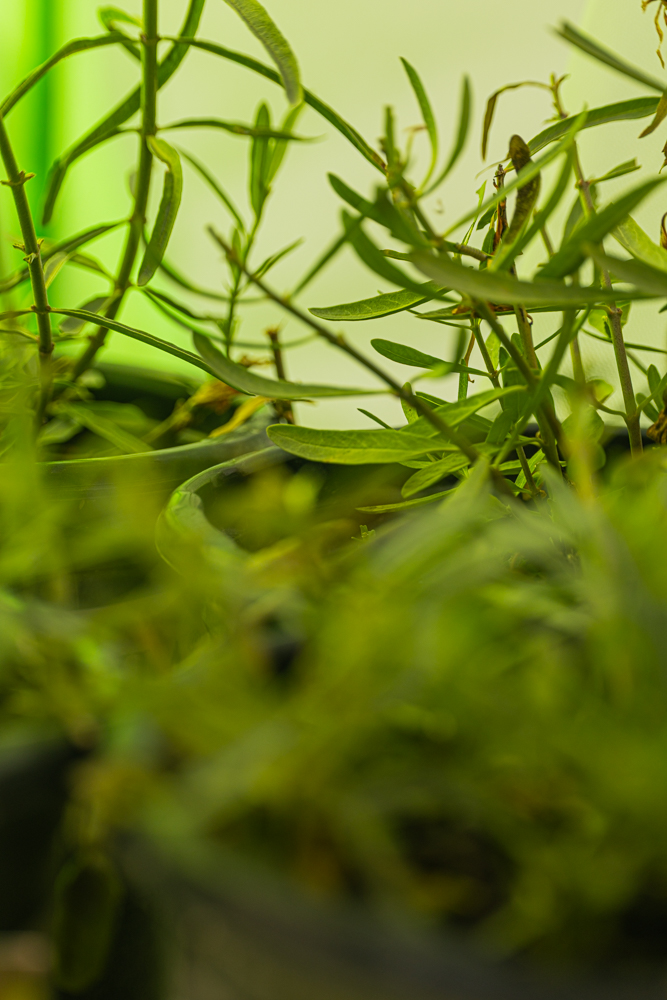
Go to your local garden store and buy a milkweed plant. A healthy starter plant is usually around $10–$20.
My biggest tip?
Buy a few. Ideally 3–5 plants.
Here’s why: caterpillars eat a lot. Like shockingly fast.
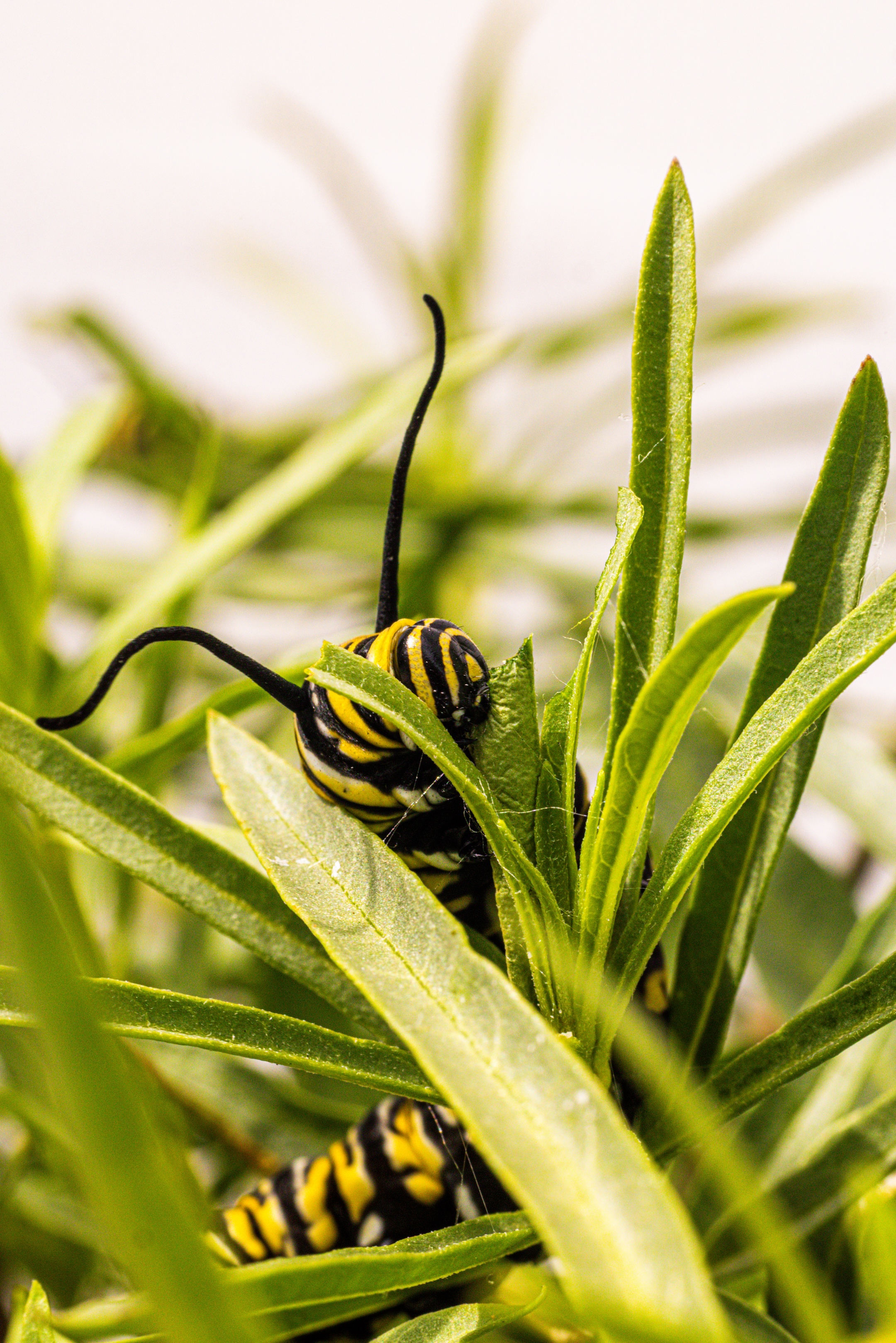
I started with one plant and about 12 caterpillars… and they stripped it bare in about 48 hours.
So:
- Plant early in the season
- Let your plants grow big and strong first
- Place them somewhere calm and sunny (not right next to a busy street)
And then… wait.
Hot Tip: Planting early means you may actually get some milkweed flowers to bloom too..
🦋 How Do Butterflies Find Milkweed?
This part actually is kind of magical, but there’s science behind it.
Monarch butterflies use their antennae and feet to detect chemical compounds unique to milkweed. They can literally “smell” and taste it in the air and when they land.
That’s how they know: this is the place to lay eggs.
And once they find your yard, they tend to come back.
🥚 Step 2: Spot the Eggs
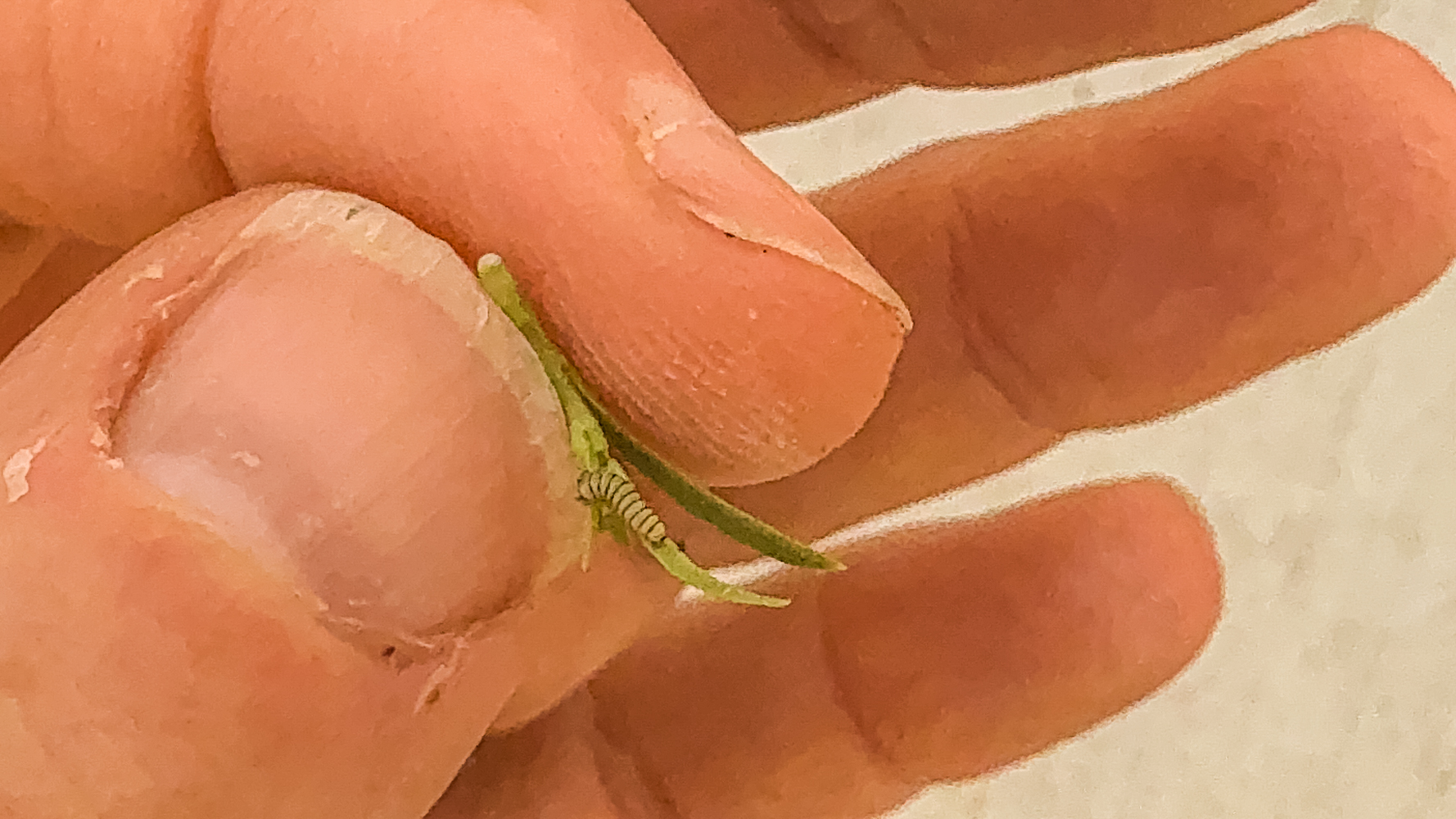
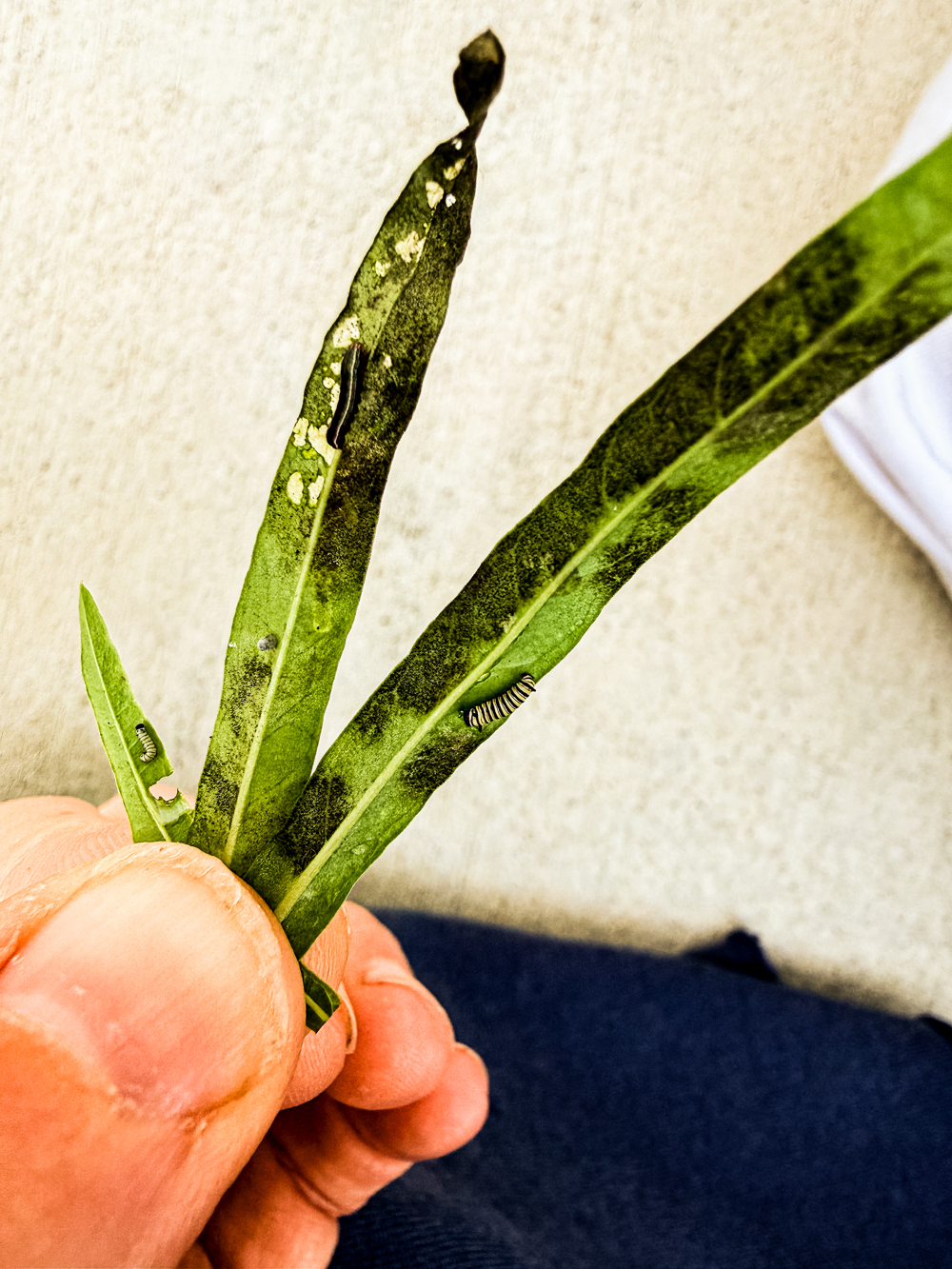
The eggs are tiny. Like… smaller than you think.
- About the size of a pinhead
- Pale white or cream colored
- Usually found on the underside of leaves
They look like little dew drops.
Timeline:
- Eggs hatch in about 3–5 days (not a full week or two)
- Then tiny caterpillars emerge
🐛Step 3: Baby Caterpillars (and Why You Might Intervene)
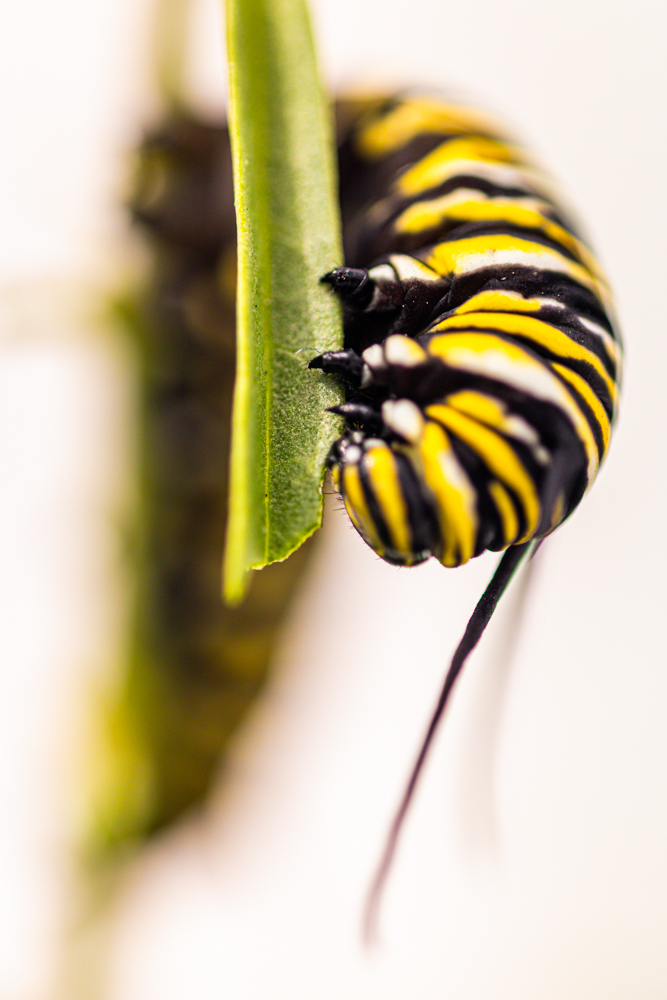
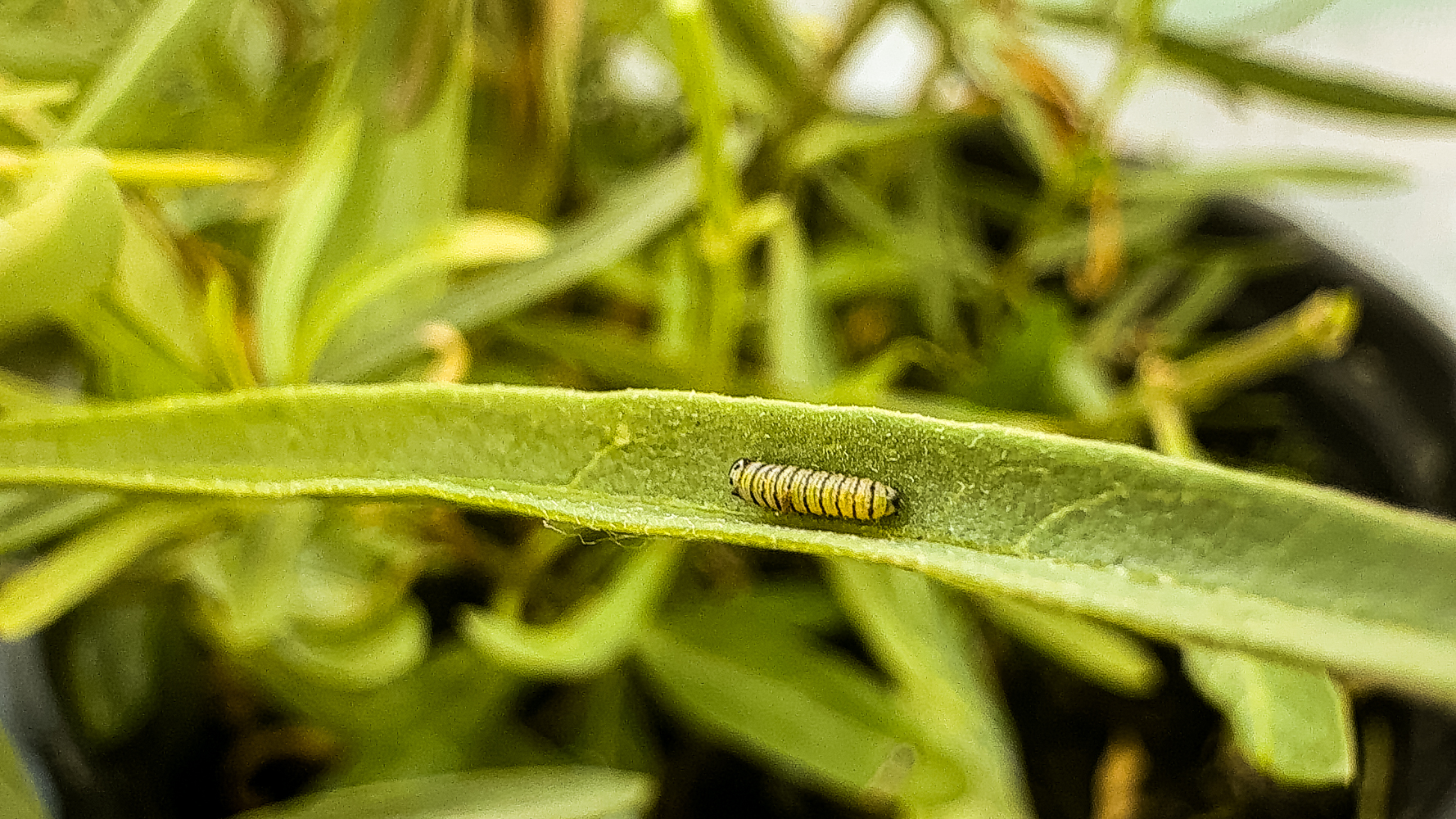
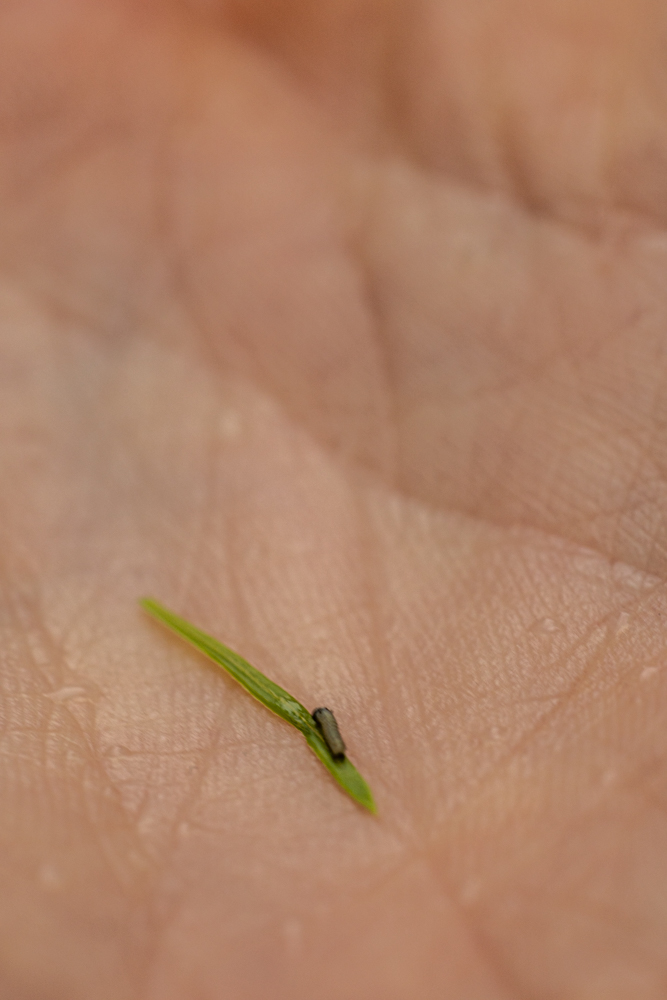
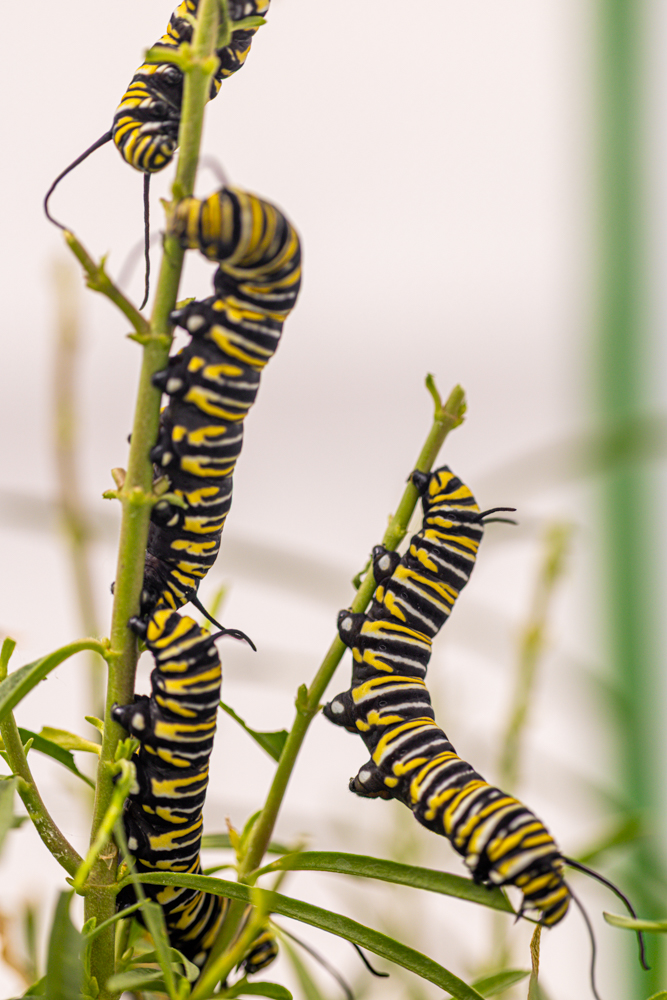
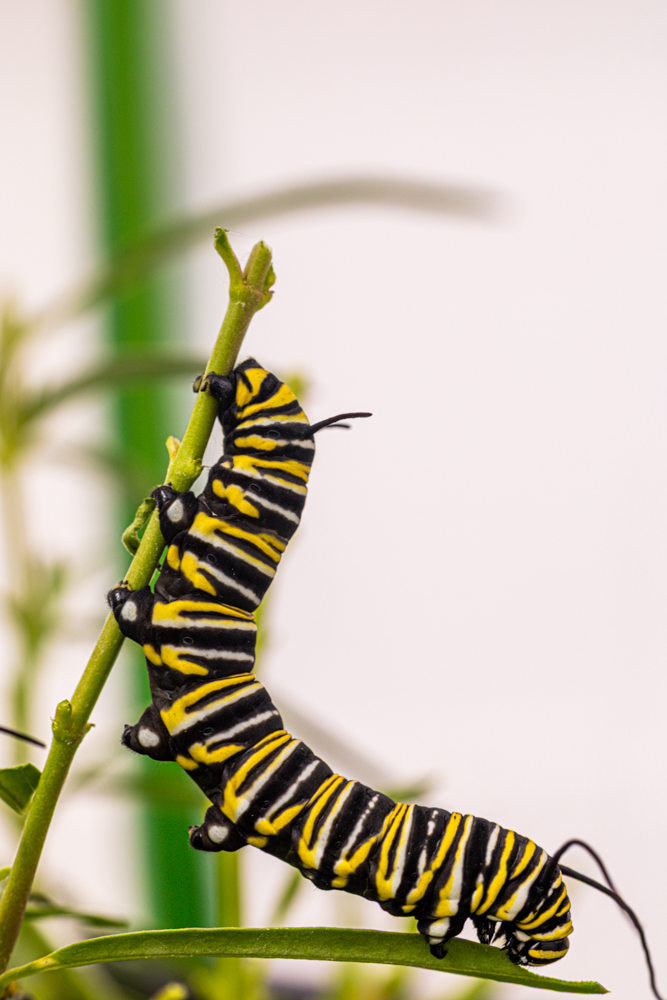
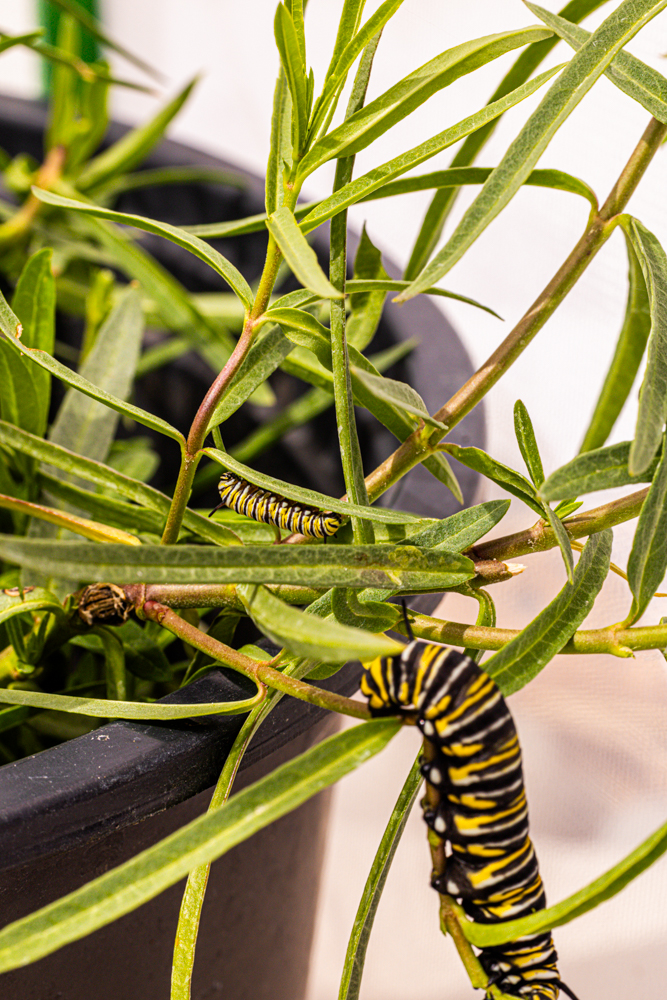
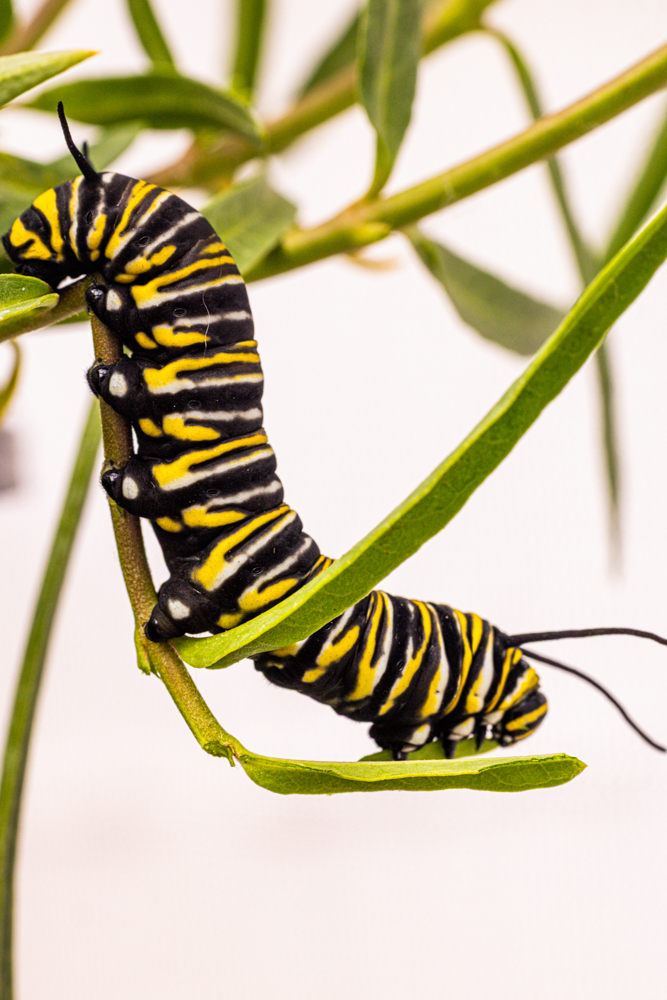
When they hatch, they are so small you’ll almost miss them. But they grow fast. Within days, they go from specks to chunky striped caterpillars about 2 inches long. And they eat constantly.
Now you have two choices:
Option 1: Hands-Off (Totally Valid)
Leave everything outside and let nature take its course.
Option 2: Protective (What I Do)
This is where it becomes a “project.” Because once you see them… it’s hard not to care.
🏡 Step 4: Create a Caterpillar “Safe House”
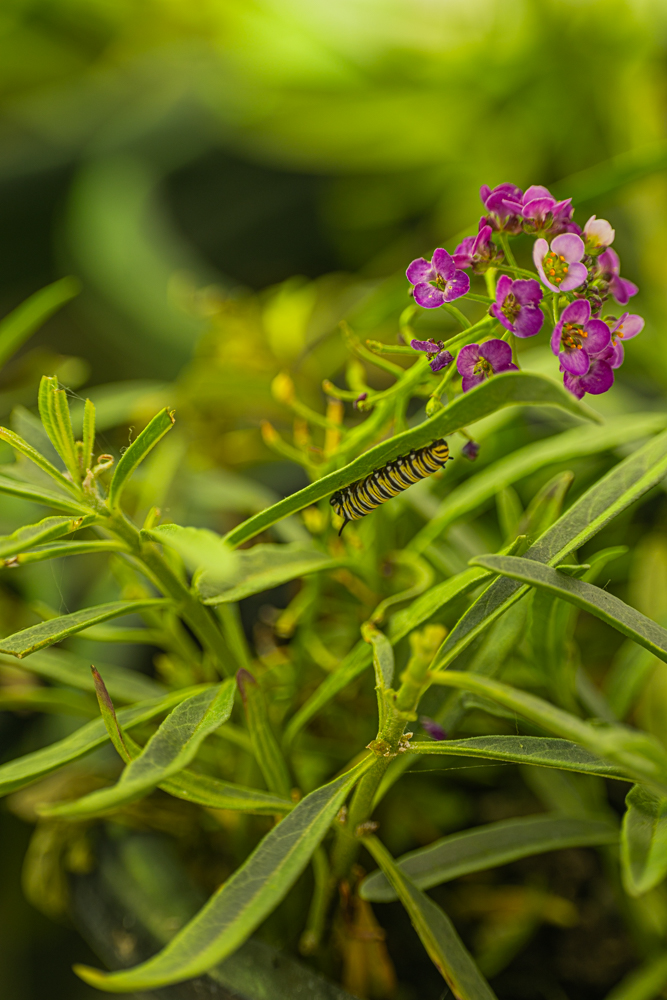
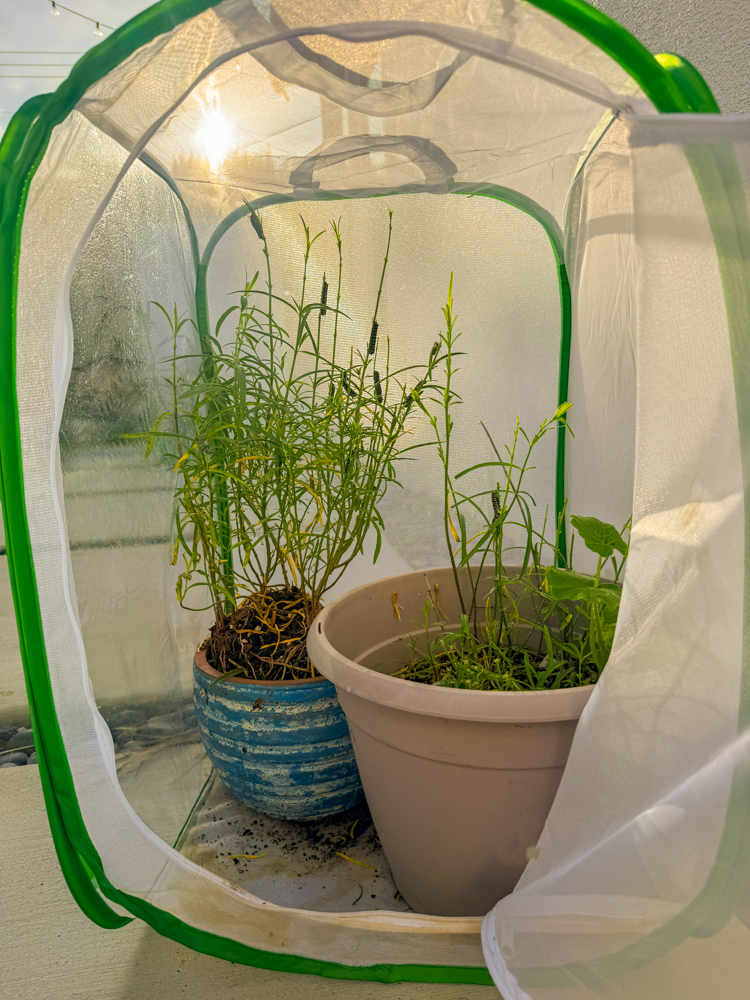
I use a large mesh butterfly enclosure and place:
- 2–3 milkweed plants inside
- 1 extra leafy plant (for cocoon spots)
Then I gently transfer caterpillars from the outdoor plant into the enclosure once they’re big enough to handle. Why? Because in the wild, most won’t survive. Predators, parasites, weather—it’s a tough life. This setup gives them a much higher chance.
🍃 Step 5: Feed Them (A Lot)
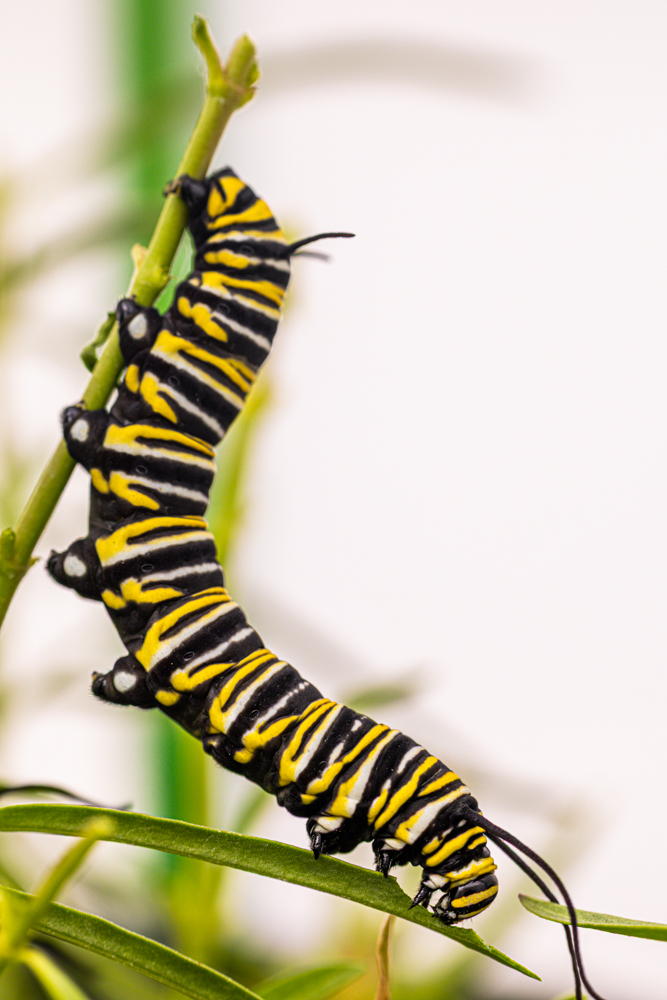
This is the main job.
- Keep fresh milkweed available at all times
- Rotate plants in as they get eaten
- Don’t overcrowd one plant
If they run out of food, they won’t survive. It’s that simple.
So yeah, this can mean returning to the garden store to spend $100 in milkweed plants because you are terrified your little guys won't make it otherwise. This is why planting a larger plant earlier in the season is super helpful. Or even better, keep a year-round butterfly garden! The milkweed roots will usually hold and regenerate the plant the next year. At least, a few of my plants from last year did.
🦋 Step 6: The Chrysalis Stage
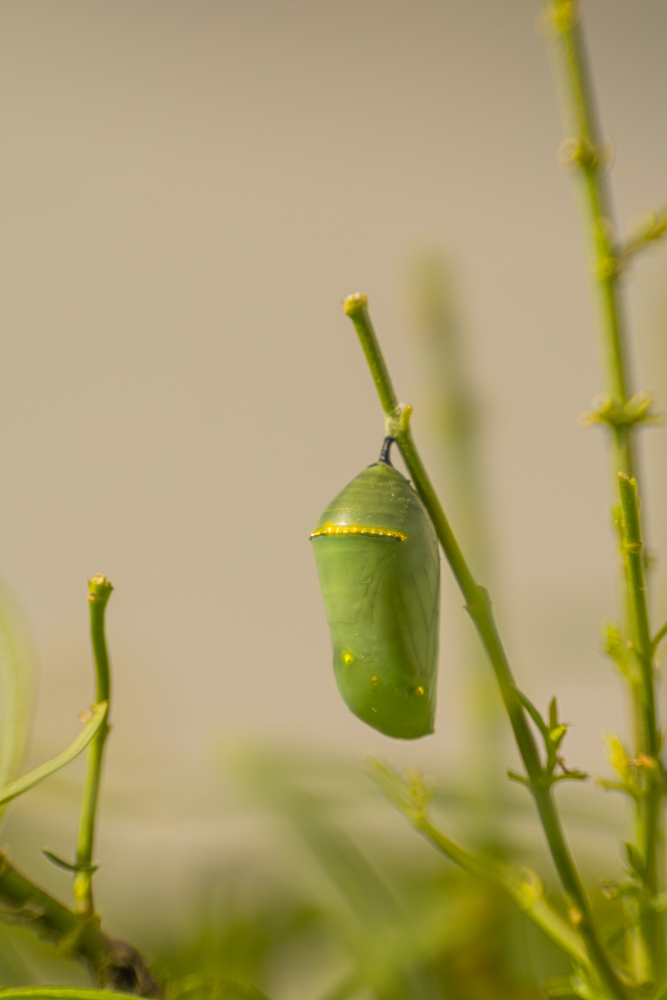
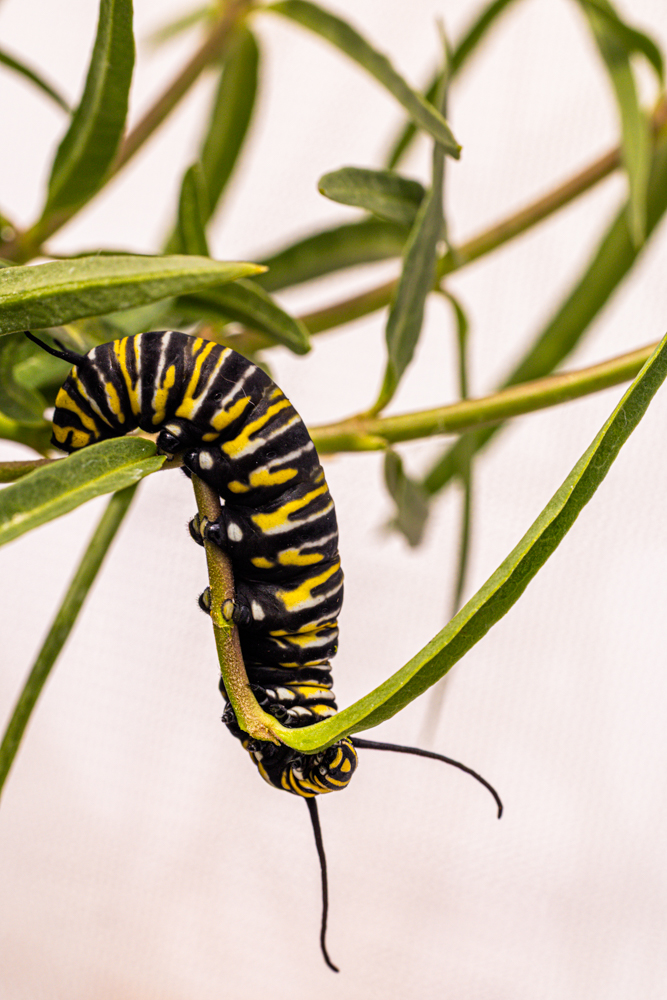
When they’re ready, caterpillars:
- Climb up
- Hang upside down in a “J” shape
- Transform into a chrysalis
This happens quickly, and it’s incredible to watch.
Important:
- Do not touch them during this stage
- Keep things dry and well-ventilated
- Water plants at the base only
Chrysalis Timeline:
- Chrysalis stage lasts about 10–14 days
⚠️ What If a Chrysalis Falls?
This happens. If it does:
- Try to reattach it using the silk (best option)
- Or gently secure it with thread or safe adhesive
Why it matters: Butterflies need to hang to expand their wings properly. Without that, wings can crumple and they won’t be able to fly.
🦋 Step 7: The Butterfly Emerges
Right before emerging:
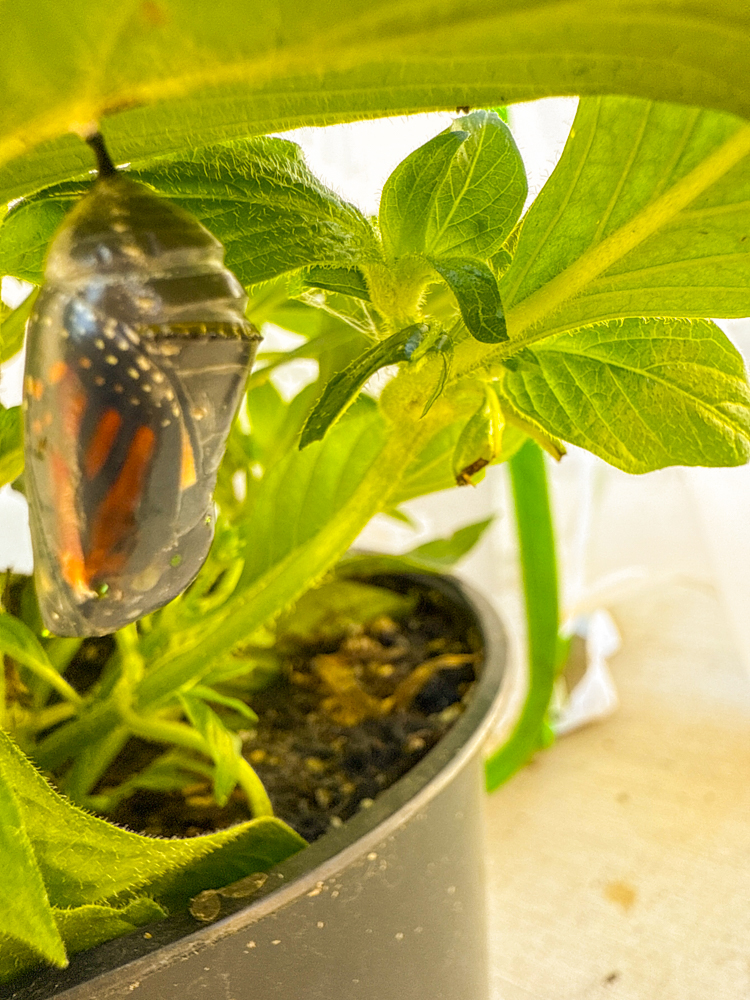
- The chrysalis turns dark and transparent
- You can see the wings inside
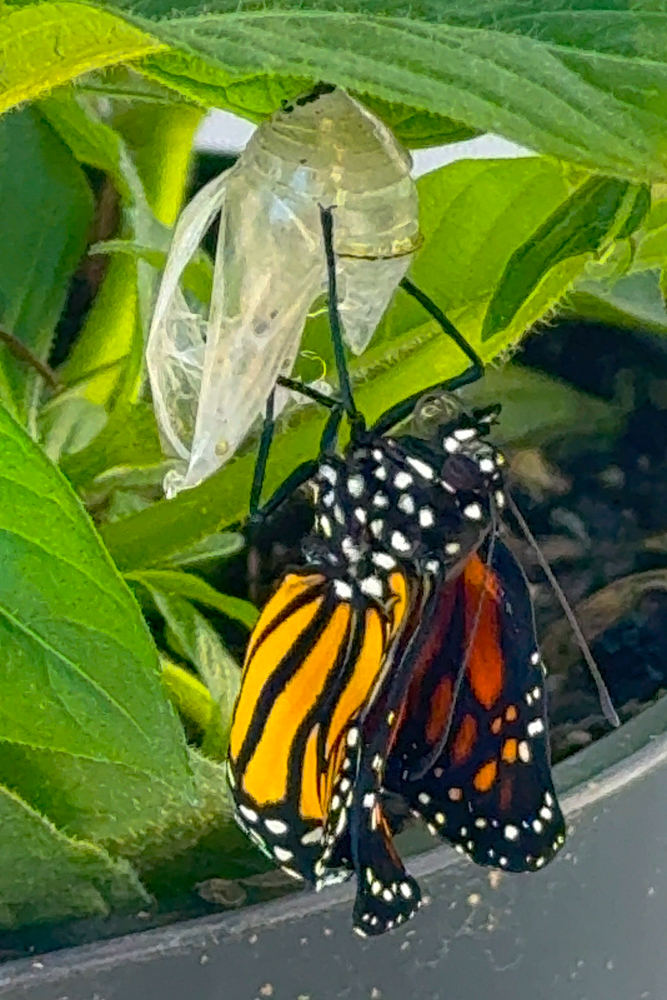
When they come out:
- They release a red liquid (normal, called meconium, not blood)
- Their wings are soft and crumpled at first
- They need a few hours to fully expand and dry
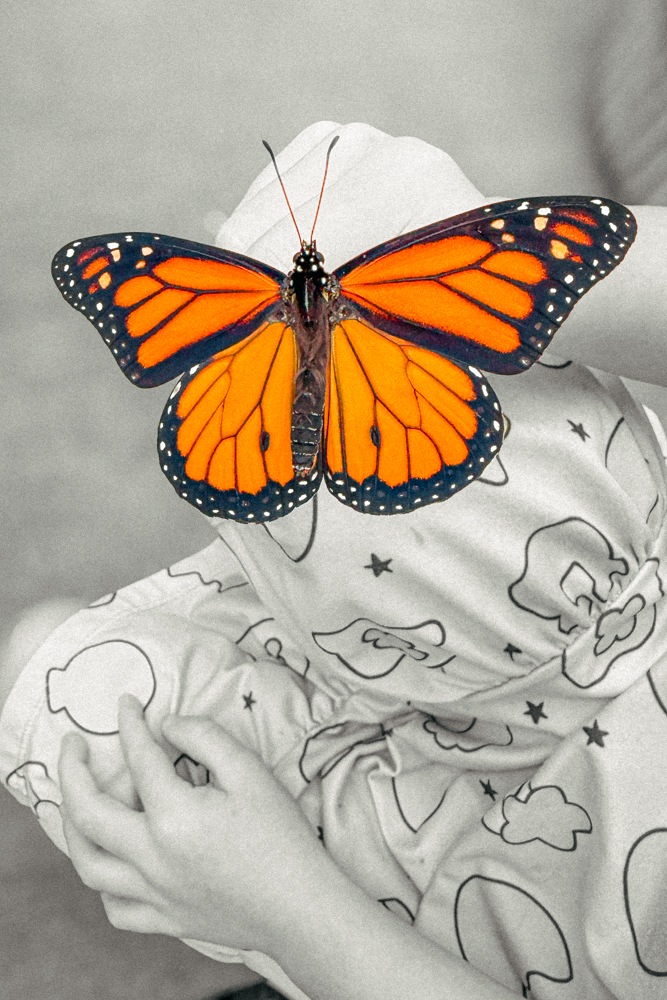
I usually leave them in the enclosure for about a day before releasing them.
🌸 Step 8: Release
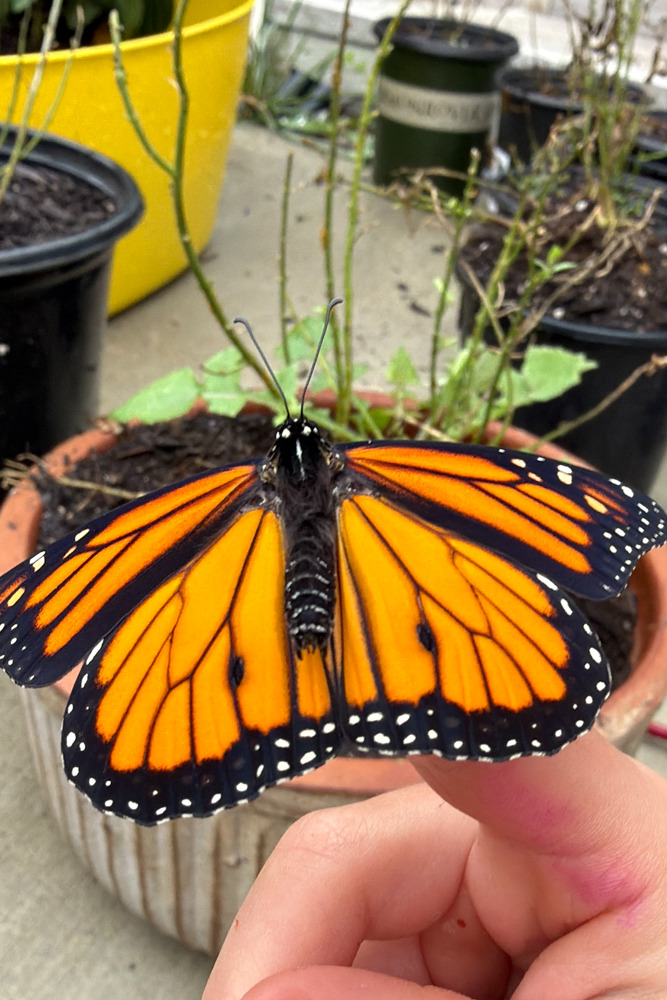
Release your butterfly near flowers. They’ll:
- Feed on nectar
- Strengthen their wings
- Fly off into the world
That’s the goal.
🌼 Best Butterfly-Friendly Flowers
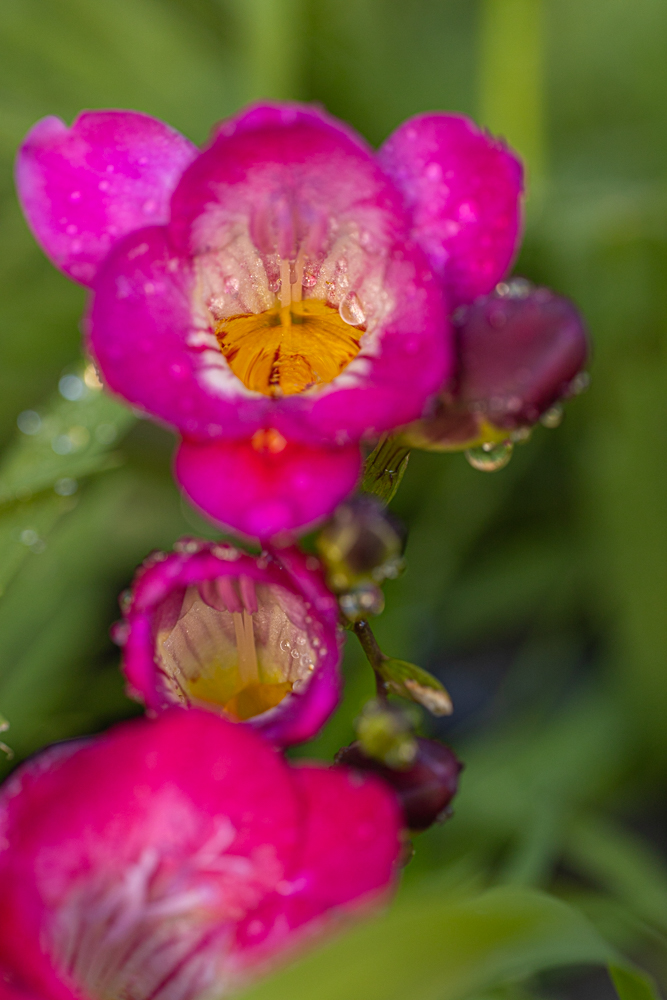
To support them after release, plant:
- Lantana
- Zinnias
- Coneflowers
- Butterfly bush
- Milkweed (for the next generation)
IMPORTANT Safety Note: Milkweed
One important note: milkweed is amazing for monarchs, but it is toxic if chewed or eaten by pets or humans, so I’m very careful with it.
I keep it outside in the garden and I would never bring it indoors because I have cats who would absolutely chew on a random leaf just to ruin my day.
The milky sap can also irritate skin and eyes, so gloves are a good idea if you’re trimming or handling a lot of it. So no, this should not scare you away from planting milkweed, it just means be aware, keep it out of reach of pets and kids, and treat it like the outdoor wildlife plant it is, not something to bring inside or let anyone snack on.
I also watch my shoes when walking indoors, because dried leaves can fall and attach to my shoes. And my cat loves eating grass from outside shoes... so if you have a pet like mine, just be aware.
Bottom line: Milkweed is toxic if eaten by humans or pets, so treat it as an outdoor plant only and don’t consume it.
Bonus Rule: Skip the Pesticides
If you want a living, thriving backyard ecosystem: Don’t spray chemicals.
Even “safe” pesticides can harm:
- Caterpillars
- Butterflies
- Bees
A slightly wild garden is a healthy one. I love my messy, weed-filled, sometimes too long and random garden. There are bugs and birds and squirrels in my yard and I'm good with that.
Final Thought
You don’t need to do all of this. You can simply plant milkweed and walk away. That alone helps. But if you want to go deeper, to watch the full transformation, to show your kids, to feel like you’re part of something small but meaningful, this process is one of the most rewarding things you can do in your own backyard.
And it all starts with one plant.





Naveed Khatri says
This is such a beautiful and inspiring guide. I love how it explains the full life cycle of monarch butterflies in such an easy way. It really encourages people to connect with nature and help support pollinators by planting milkweed. Thank you for sharing this meaningful information.